11 Forbidden Roads: Jerusalem, 2004 (pp. 171-178)
This short chapter must be read in its entirety to be appreciated.
"My agitated mind revived the memory of the death of a relative soon after the occupation. He had been driving alone near the Latrun salient, close to the border with Israel. He was stopped by an army jeep and killed. The soldiers took his black-and-white-checked keffiyeh, dipped it in petrol from his car and set his corpse on fire. A few days later his burnt remains were found by a shepherd." (pp. 175-176)
"The Israelis have been inflexible, allowed to get away with their crimes because of the sympathy felt towards them because of the Holocaust. But this emotional dispensation would eventually run its course." (p. 177)
Israel is also supported for strategic reasons, which cannot last indefinitely.
Once, in a discussion about Israel in a magazine letter column, I argued that all states should be secular and was accused of advocating an Islamic state. The argumentative principle here is: if you dislike what someone says, then denigrate it whatever way you can, even at the expense of forgetting the content of what was in fact said.
Thursday, 31 January 2019
Tuesday, 29 January 2019
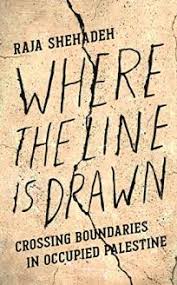
Where The Line Is Drawn XXII
Shehadeh writes that certain well dressed and assured members of the Palestinian Authority would never feel any guilt or responsibility because they did not:
"...have an active populace ready to hold [them] accountable." (p. 170)
There are two concepts of leadership: those who "...managed to remain where they were - on top..." (ibid.) and those who encourage and give a lead to popular action.
"...I wondered who to blame for the death of the young men in Jenin. Israel and its brutal policies, of course, but also the Palestinian leadership for its failure to lead. If it couldn't assume responsibility for its own people, its failure was criminal." (ibid.)
Shehadeh condemns "...the appalling actions of the Palestinians who killed innocent civilians..." (p. 159), the brutal policies of Israel and the criminal failure of the Palestinian Authority. I agree with him - but, living on a peaceful, racially mixed street in the North West of England, I am not in danger of being fired at by both sides.
"...have an active populace ready to hold [them] accountable." (p. 170)
There are two concepts of leadership: those who "...managed to remain where they were - on top..." (ibid.) and those who encourage and give a lead to popular action.
"...I wondered who to blame for the death of the young men in Jenin. Israel and its brutal policies, of course, but also the Palestinian leadership for its failure to lead. If it couldn't assume responsibility for its own people, its failure was criminal." (ibid.)
Shehadeh condemns "...the appalling actions of the Palestinians who killed innocent civilians..." (p. 159), the brutal policies of Israel and the criminal failure of the Palestinian Authority. I agree with him - but, living on a peaceful, racially mixed street in the North West of England, I am not in danger of being fired at by both sides.
Monday, 28 January 2019
Where The Line Is Drawn XXI
"Perhaps it was a mistake not to bring up the subject of how [Henry] could situate his office in a house that had been taken by force, with no compensation paid to its original owners. Yet somehow we had to conduct our friendship on a plane above and outside politics. How long this would be possible, I didn't know. I suppose it would depend on whether I could remain calm." (p. 158)
There is a spectrum of possible responses from not caring how Henry had acquired the building to severing all contact with Henry - to bombing his office. Shehadeh is somewhere on the spectrum between not caring and severing contact. Some people think that anything that a government does is right.
Sunday, 27 January 2019
Where The Line Is Drawn XX
"Shehadeh's Jewish Israeli friend, Henry:
"...lived in an attractive, quiet area with parks and clean, well-ordered streets - amenities that our cities could not enjoy after the large-scale confiscation of Palestinian land." (pp. 155-156)
"What made our meetings easier was that this time Henry and I were politically on the same side. My heart was not with this armed struggle against Israel, which I saw as futile, but I was still trying to understand and make sense of it all and needed Henry's help." (p. 156)
Injustice can and should be opposed by campaigns, demonstrations, lobbies, boycotts, strikes, occupations and, unless we are pacifists, sometimes by armed struggle. Communities and individuals certainly have a right of self-defense against an oppressive state.
"...lived in an attractive, quiet area with parks and clean, well-ordered streets - amenities that our cities could not enjoy after the large-scale confiscation of Palestinian land." (pp. 155-156)
"What made our meetings easier was that this time Henry and I were politically on the same side. My heart was not with this armed struggle against Israel, which I saw as futile, but I was still trying to understand and make sense of it all and needed Henry's help." (p. 156)
Injustice can and should be opposed by campaigns, demonstrations, lobbies, boycotts, strikes, occupations and, unless we are pacifists, sometimes by armed struggle. Communities and individuals certainly have a right of self-defense against an oppressive state.
Accidental Associations
Because of a reference to the Azores in Julian May's The Many-Colored Land, I reread "Hob's Leviathan" in Neil Gaiman's The Sandman: Worlds' End and then remembered what was happening with my family and also my work in 1993, twenty six years ago. See also Literary Associations.
Where The Line Is Drawn XIX
10 Crossings During The Second Intifada: Ramallah, 2000 (pp. 155-170)
"In September 2000, five years after the Oslo Accords, came a second, more violent intifada. Israel immediately imposed more restrictions on movement and forbade us from using many of the roads." (p. 155)
In September 2000, I stopped working in Merseyside and started to work in Lancashire. This meant that I again lived full-time in Lancaster instead of commuting once or twice weekly to a bed-sit in Merseyside. Over the years, the bed-sit had moved from Crosby to Southport, both in Sefton, to Knowsley to Liverpool. Of course, I did not have to pass through military check-points while traveling.
Although I am involved in political activities, I am no way as well informed as many of many comrades on foreign affairs and international struggles. I remember that Palestine was an issue when I was at University in Dublin in the 1960s and when I was at Manchester Polytechnic, 1981-'82. Then this second intifada was still in the future. I was also under pressure at work in 2000 and might have been even less aware of less immediate (to me) issues.
"...in West Jerusalem...the municipal government, which was also responsible for East Jerusalem, provided well for all its Jewish residents while neglecting its Palestinian residents." (ibid.)
There is injustice and resistance.
"In September 2000, five years after the Oslo Accords, came a second, more violent intifada. Israel immediately imposed more restrictions on movement and forbade us from using many of the roads." (p. 155)
In September 2000, I stopped working in Merseyside and started to work in Lancashire. This meant that I again lived full-time in Lancaster instead of commuting once or twice weekly to a bed-sit in Merseyside. Over the years, the bed-sit had moved from Crosby to Southport, both in Sefton, to Knowsley to Liverpool. Of course, I did not have to pass through military check-points while traveling.
Although I am involved in political activities, I am no way as well informed as many of many comrades on foreign affairs and international struggles. I remember that Palestine was an issue when I was at University in Dublin in the 1960s and when I was at Manchester Polytechnic, 1981-'82. Then this second intifada was still in the future. I was also under pressure at work in 2000 and might have been even less aware of less immediate (to me) issues.
"...in West Jerusalem...the municipal government, which was also responsible for East Jerusalem, provided well for all its Jewish residents while neglecting its Palestinian residents." (ibid.)
There is injustice and resistance.
Saturday, 26 January 2019
Where The Line Is Drawn XVIII
"It was distressing to realise that rather than encouraging back leading Palestinian cultural icons, artists and writers like Kamal Boullata, Mourid Barghouti and Samia Halaby - many of whom Israel actually refused to allow to return - Israel was instead allowing thousands of policemen to control us, quelling any dissent to the deal that they had signed with Arafat." (p. 142)
Political leaders have signed a peace deal but cultural leaders are refused entry and thousands of police are needed to enforce the deal? Political leaders sell out unless they are held to account by a mass movement.
Subscribe to:
Posts (Atom)