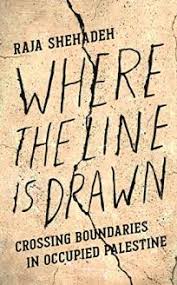
14 Lunch At Everest: Beit Jalla, 2013
"...Judy was one of the women who in December 1988 started Women in Black, holding vigils every Friday at which they carried 'Stop the Occupation' posters in Hagar Square in Jerusalem and endured the hostility of passers-by." (p. 210)
During the uprising that began in October 2015, some resistance was violent, some not, but:
"The Israeli government responded with violence, defining all resistance as terrorism." (p. 216)
Citizens were encouraged to carry weapons and:
"The Palestinians who were shot were often left to bleed to death." (p. 217)
A sergeant in the Israeli army medical corps found a Palestinian lying on the ground bleeding from a bullet wound and shot him point blank in the head. He said, "'This terrorist must die.'" (ibid.) His family hugged him, the Israeli public considered him a hero, thousands demonstrated to support him, 60% of young people thought that he had done right and Netanyahu "...called his family to express his support." (p. 218) Netanyahu also said that fences and barriers would defend Israel "...against the wild beasts." (ibid.)
Showing posts sorted by date for query Jerusalem. Sort by relevance Show all posts
Friday, 8 February 2019
Thursday, 31 January 2019
Where The Line Is Drawn XXIII
11 Forbidden Roads: Jerusalem, 2004 (pp. 171-178)
This short chapter must be read in its entirety to be appreciated.
"My agitated mind revived the memory of the death of a relative soon after the occupation. He had been driving alone near the Latrun salient, close to the border with Israel. He was stopped by an army jeep and killed. The soldiers took his black-and-white-checked keffiyeh, dipped it in petrol from his car and set his corpse on fire. A few days later his burnt remains were found by a shepherd." (pp. 175-176)
"The Israelis have been inflexible, allowed to get away with their crimes because of the sympathy felt towards them because of the Holocaust. But this emotional dispensation would eventually run its course." (p. 177)
Israel is also supported for strategic reasons, which cannot last indefinitely.
Once, in a discussion about Israel in a magazine letter column, I argued that all states should be secular and was accused of advocating an Islamic state. The argumentative principle here is: if you dislike what someone says, then denigrate it whatever way you can, even at the expense of forgetting the content of what was in fact said.
This short chapter must be read in its entirety to be appreciated.
"My agitated mind revived the memory of the death of a relative soon after the occupation. He had been driving alone near the Latrun salient, close to the border with Israel. He was stopped by an army jeep and killed. The soldiers took his black-and-white-checked keffiyeh, dipped it in petrol from his car and set his corpse on fire. A few days later his burnt remains were found by a shepherd." (pp. 175-176)
"The Israelis have been inflexible, allowed to get away with their crimes because of the sympathy felt towards them because of the Holocaust. But this emotional dispensation would eventually run its course." (p. 177)
Israel is also supported for strategic reasons, which cannot last indefinitely.
Once, in a discussion about Israel in a magazine letter column, I argued that all states should be secular and was accused of advocating an Islamic state. The argumentative principle here is: if you dislike what someone says, then denigrate it whatever way you can, even at the expense of forgetting the content of what was in fact said.
Sunday, 27 January 2019
Where The Line Is Drawn XIX
10 Crossings During The Second Intifada: Ramallah, 2000 (pp. 155-170)
"In September 2000, five years after the Oslo Accords, came a second, more violent intifada. Israel immediately imposed more restrictions on movement and forbade us from using many of the roads." (p. 155)
In September 2000, I stopped working in Merseyside and started to work in Lancashire. This meant that I again lived full-time in Lancaster instead of commuting once or twice weekly to a bed-sit in Merseyside. Over the years, the bed-sit had moved from Crosby to Southport, both in Sefton, to Knowsley to Liverpool. Of course, I did not have to pass through military check-points while traveling.
Although I am involved in political activities, I am no way as well informed as many of many comrades on foreign affairs and international struggles. I remember that Palestine was an issue when I was at University in Dublin in the 1960s and when I was at Manchester Polytechnic, 1981-'82. Then this second intifada was still in the future. I was also under pressure at work in 2000 and might have been even less aware of less immediate (to me) issues.
"...in West Jerusalem...the municipal government, which was also responsible for East Jerusalem, provided well for all its Jewish residents while neglecting its Palestinian residents." (ibid.)
There is injustice and resistance.
"In September 2000, five years after the Oslo Accords, came a second, more violent intifada. Israel immediately imposed more restrictions on movement and forbade us from using many of the roads." (p. 155)
In September 2000, I stopped working in Merseyside and started to work in Lancashire. This meant that I again lived full-time in Lancaster instead of commuting once or twice weekly to a bed-sit in Merseyside. Over the years, the bed-sit had moved from Crosby to Southport, both in Sefton, to Knowsley to Liverpool. Of course, I did not have to pass through military check-points while traveling.
Although I am involved in political activities, I am no way as well informed as many of many comrades on foreign affairs and international struggles. I remember that Palestine was an issue when I was at University in Dublin in the 1960s and when I was at Manchester Polytechnic, 1981-'82. Then this second intifada was still in the future. I was also under pressure at work in 2000 and might have been even less aware of less immediate (to me) issues.
"...in West Jerusalem...the municipal government, which was also responsible for East Jerusalem, provided well for all its Jewish residents while neglecting its Palestinian residents." (ibid.)
There is injustice and resistance.
Wednesday, 23 January 2019
Where The Line Is Drawn XIV
7 An Interlude: Jerusalem, 1980 (pp. 111-117)
"Israeli military courts were a parody of real courts. Israeli officials used their legal expertise to devise ways of justifying the theft of our land." (p. 111)
"Half a century of occupation and despite its large number of Arab customers [the Israeli bank] continues to avoid using a single word of Arabic in any of their statements and letters." (p. 112)
Shehadeh's father had spoken English to Jewish colleagues in Mandatory Palestine but, after 1967, Israeli officials defiantly responded in Hebrew. The military government did not introduce Hebrew into schools in the West Bank or Gaza. Israel "...was looking for ways to encourage Palestinians to leave." (ibid.)
Shehadeh attended Hebrew classes where the teacher said that the land was mainly empty when the Jewish immigrants arrived. When Shehadeh, in his shaky Hebrew, disagreed, she merely commended his use of the language.
Some Arabs learned Hebrew in order to understand orders bellowed by soldiers and to avoid being shot. When the class was featured on Israeli TV, the teacher asked them to read the new Hebrew names of streets in the Arab quarter. He also translated graffiti: "'Mavet le aravim. Death to the Arabs.'" (p. 117)
"Israeli military courts were a parody of real courts. Israeli officials used their legal expertise to devise ways of justifying the theft of our land." (p. 111)
"Half a century of occupation and despite its large number of Arab customers [the Israeli bank] continues to avoid using a single word of Arabic in any of their statements and letters." (p. 112)
Shehadeh's father had spoken English to Jewish colleagues in Mandatory Palestine but, after 1967, Israeli officials defiantly responded in Hebrew. The military government did not introduce Hebrew into schools in the West Bank or Gaza. Israel "...was looking for ways to encourage Palestinians to leave." (ibid.)
Shehadeh attended Hebrew classes where the teacher said that the land was mainly empty when the Jewish immigrants arrived. When Shehadeh, in his shaky Hebrew, disagreed, she merely commended his use of the language.
Some Arabs learned Hebrew in order to understand orders bellowed by soldiers and to avoid being shot. When the class was featured on Israeli TV, the teacher asked them to read the new Hebrew names of streets in the Arab quarter. He also translated graffiti: "'Mavet le aravim. Death to the Arabs.'" (p. 117)
Sunday, 20 January 2019
Where The Line Is Drawn IV
See recent posts.
4 Naomi: Jerusalem, 1981 (pp. 59-77
"We Palestinians decided to stay put despite all the efforts of the occupiers to make life difficult for us in order to encourage us to leave." (pp. 60-61)
"...I was investigating the illegal ways in which the settlers had registered a local company to circumvent prevailing Jordanian law prohibiting the sale of land to foreigners without permission from a local authority. Meanwhile, messianic rabbis, such as Zvi Yehuda Kook, were claiming that the settlement of the land was by divine command. I remember wondering what could be so divine about a process that was preceded by stealth and illegality." (pp. 61-62)
"God moves in a mysterious way..."
"Israel reneged on the promise it had made to US president Jimmy Carter not to build more Jewish settlements in the West Bank." (p. 63)
No government has a monopoly on breaking promises. I live in Britain which has been called "Perfidious Albion."
A rabbi sang, "Thus may all Israel's enemies perish," when an Arab mayor lost his legs because a settler terrorist group planted a bomb in his car. (pp. 63-64)
4 Naomi: Jerusalem, 1981 (pp. 59-77
"We Palestinians decided to stay put despite all the efforts of the occupiers to make life difficult for us in order to encourage us to leave." (pp. 60-61)
"...I was investigating the illegal ways in which the settlers had registered a local company to circumvent prevailing Jordanian law prohibiting the sale of land to foreigners without permission from a local authority. Meanwhile, messianic rabbis, such as Zvi Yehuda Kook, were claiming that the settlement of the land was by divine command. I remember wondering what could be so divine about a process that was preceded by stealth and illegality." (pp. 61-62)
"God moves in a mysterious way..."
"Israel reneged on the promise it had made to US president Jimmy Carter not to build more Jewish settlements in the West Bank." (p. 63)
No government has a monopoly on breaking promises. I live in Britain which has been called "Perfidious Albion."
A rabbi sang, "Thus may all Israel's enemies perish," when an Arab mayor lost his legs because a settler terrorist group planted a bomb in his car. (pp. 63-64)
Saturday, 30 December 2017
Literary References To Popular Fiction
See Batman.
Jerusalem also refers to Daleks, which are as much a part of the British landscape as the supermarkets that Alan Moore names, and, again, Moore has contributed to that fictional universe. The Daleks are enemies of the Time Lord known as the Doctor and Moore wrote back-up stories about other Time Lords in Doctor Who Magazine.
The BBC's the Doctor and the Daleks are successors of HG Wells' the Time Traveler and the Morlocks. Wells incorporated an ironic reference to Morlocks in one of his mainstream novels:
"There's an incurable misunderstanding between the modern employer and the modern employed," the chief labour spokesman said, speaking in a broad accent that completely hid from him and the bishop and every one the fact that he was by far the best-read man of the party. "Disraeli called them the Two Nations, but that was long ago. Now it's a case of two species. Machinery has made them into different species. The employer lives away from his work-people, marries a wife foreign, out of a county family or suchlike, trains his children from their very birth in a different manner. Why, the growth curve is different for the two species. They haven't even a common speech between them. One looks east and the other looks west. How can you expect them to agree? Of course they won't agree. We've got to fight it out. They say we're their slaves for ever. Have you ever read Lady Bell's 'At the Works'? A well-intentioned woman, but she gives the whole thing away. We say, No! It's our sort and not your sort. We'll do without you. We'll get a little more education and then we'll do without you. We're pressing for all we can get, and when we've got that we'll take breath and press for more. We're the Morlocks. Coming up. It isn't our fault that we've differentiated."
-copied from here.
Jerusalem also refers to Daleks, which are as much a part of the British landscape as the supermarkets that Alan Moore names, and, again, Moore has contributed to that fictional universe. The Daleks are enemies of the Time Lord known as the Doctor and Moore wrote back-up stories about other Time Lords in Doctor Who Magazine.
The BBC's the Doctor and the Daleks are successors of HG Wells' the Time Traveler and the Morlocks. Wells incorporated an ironic reference to Morlocks in one of his mainstream novels:
"There's an incurable misunderstanding between the modern employer and the modern employed," the chief labour spokesman said, speaking in a broad accent that completely hid from him and the bishop and every one the fact that he was by far the best-read man of the party. "Disraeli called them the Two Nations, but that was long ago. Now it's a case of two species. Machinery has made them into different species. The employer lives away from his work-people, marries a wife foreign, out of a county family or suchlike, trains his children from their very birth in a different manner. Why, the growth curve is different for the two species. They haven't even a common speech between them. One looks east and the other looks west. How can you expect them to agree? Of course they won't agree. We've got to fight it out. They say we're their slaves for ever. Have you ever read Lady Bell's 'At the Works'? A well-intentioned woman, but she gives the whole thing away. We say, No! It's our sort and not your sort. We'll do without you. We'll get a little more education and then we'll do without you. We're pressing for all we can get, and when we've got that we'll take breath and press for more. We're the Morlocks. Coming up. It isn't our fault that we've differentiated."
-copied from here.
Wednesday, 27 December 2017
Walking Through Northampton
Both Alan Moore in his Voice Of The Fire and Alma Warren in the same author's Jerusalem:
walk through the center of Northampton;
pass the statue of Charles Bradlaugh (for the statue, see here);
reflect on what they see;
impart information about the history of the city, its buildings and people.
See Streets And Cities II.
Lancaster has a statue of Queen Victoria in a square in front of the Town Hall. See Today In Lancaster. However, I cannot write either as entertainingly or as informatively about a walk through Lancaster. See The Spider And I Are One.
Fiction is easier to appreciate than to emulate.
walk through the center of Northampton;
pass the statue of Charles Bradlaugh (for the statue, see here);
reflect on what they see;
impart information about the history of the city, its buildings and people.
See Streets And Cities II.
Lancaster has a statue of Queen Victoria in a square in front of the Town Hall. See Today In Lancaster. However, I cannot write either as entertainingly or as informatively about a walk through Lancaster. See The Spider And I Are One.
Fiction is easier to appreciate than to emulate.
Tuesday, 26 December 2017
The Blogverse III
At this time of year, I usually take a break from my main, Poul Anderson Appreciation, blog and try to promote the blogverse, i.e., several cross-referring blogs, thus:
The Blogverse
The Blogverse II
Blog Crossovers
Posts About Alan Moore's Jerusalem
Posts On Christmas Day In Previous Years On Different Blogs
Posts about Alan Moore's multi-faceted works sprawl across several blogs.
Another feature of this time of year is books received as presents. In Sapiens: A Brief History of Mankind (London, 2014), Yuval Noah Harari argues that Homo Sapiens conquered the world because a Cognitive Revolution enabled our ancestors to create unifying myths and legal fictions facilitating cooperation between strangers across continents. This fits with recent discussions on Poul Anderson Appreciation and with Alan Moore's description of
religions as "higher fictions."
Lion-Headed Time has been discussed on PAA here. Harari discusses the Lion-Man.
See also:
El Jabato;
The Haertel Scholium Connections;
Year 2018!
The Blogverse
The Blogverse II
Blog Crossovers
Posts About Alan Moore's Jerusalem
Posts On Christmas Day In Previous Years On Different Blogs
Posts about Alan Moore's multi-faceted works sprawl across several blogs.
Another feature of this time of year is books received as presents. In Sapiens: A Brief History of Mankind (London, 2014), Yuval Noah Harari argues that Homo Sapiens conquered the world because a Cognitive Revolution enabled our ancestors to create unifying myths and legal fictions facilitating cooperation between strangers across continents. This fits with recent discussions on Poul Anderson Appreciation and with Alan Moore's description of
religions as "higher fictions."
Lion-Headed Time has been discussed on PAA here. Harari discusses the Lion-Man.
See also:
El Jabato;
The Haertel Scholium Connections;
Year 2018!
Dualism
Line of thought continued from here.
In Platonic-Cartesian mind-body dualism, a mind or soul not only interacts with a human body at each moment of that body's existence but also directs that body to speak and act as it does in that moment whereas, according to the world-view summarized by three authors here, a mind/soul/mental existence/consciousness/awareness merely observes what the body is doing at each moment and furthermore the mind etc makes these observations successively. Thus, there is some sense in which it is true to say that, when the mind etc is in one moment of the body's existence, all of that body's other moments simultaneously exist without the mind etc being present in them. Thus, the latter view removes consciousness even further from its active role in the life of an organism than Platonism does.
There are many facets to Alan Moore's novel, Jerusalem. I have focused on this facet because I am a Philosophy graduate. I will continue to read about Alma Warren's experiences.
In Platonic-Cartesian mind-body dualism, a mind or soul not only interacts with a human body at each moment of that body's existence but also directs that body to speak and act as it does in that moment whereas, according to the world-view summarized by three authors here, a mind/soul/mental existence/consciousness/awareness merely observes what the body is doing at each moment and furthermore the mind etc makes these observations successively. Thus, there is some sense in which it is true to say that, when the mind etc is in one moment of the body's existence, all of that body's other moments simultaneously exist without the mind etc being present in them. Thus, the latter view removes consciousness even further from its active role in the life of an organism than Platonism does.
There are many facets to Alan Moore's novel, Jerusalem. I have focused on this facet because I am a Philosophy graduate. I will continue to read about Alma Warren's experiences.
Monday, 25 December 2017
An Everlasting Solid
Alan Moore, Jerusalem (London, 2016), Book Three.
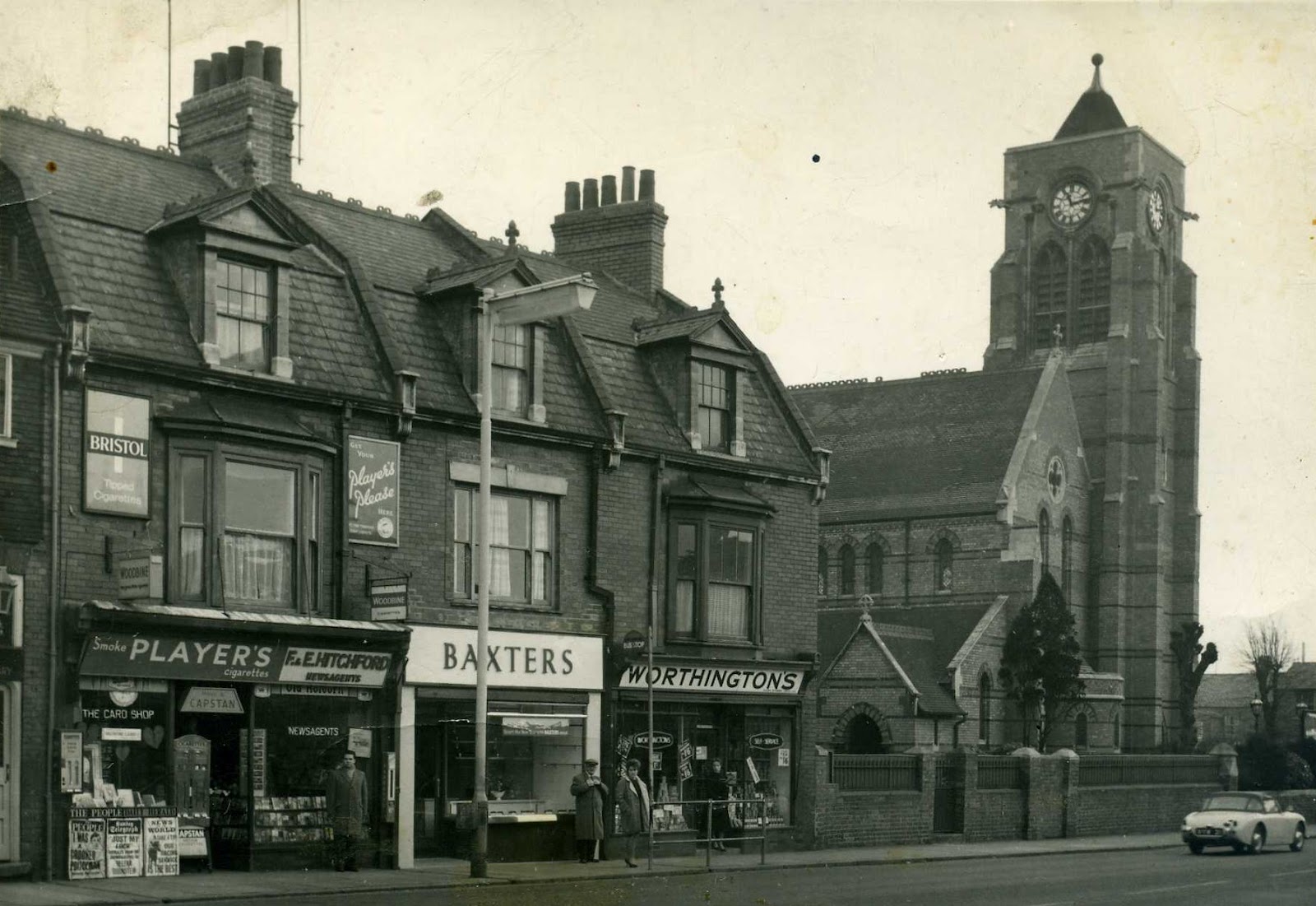
Walking down Kettering Road, Northampton (see image), Alma Warren contemplates:
"...a simultaneous eternity...time as an everlasting solid in which nothing changes, nothing dies." (p. 790)
(But "everlasting" means lasting forever through time...)
HG Wells and JW Dunne notwithstanding, I no longer accept Alma's view of time but let's consider its implications. The temporal solid contains within it the world line of every conscious organism. While life exists, a three-dimensional cross-section of the solid contains cross-sections of world lines. A three-dimensional cross-section of the world line of an organism is what we usually call just an organism. However, in the present context, we must differentiate between a four-dimensional organism and its three-dimensional cross-sections. Each such cross-section of a conscious organism is conscious of its three dimensional surroundings although not of the four dimensional totality. It follows that consciousness is not separate from the organism but, on the contrary, is a feature of each cross-section of the organism. It follows further that this account is invalid:
Alan Moore, Jerusalem (London, 2016)
"It was as though while people were still living they were really frozen motionless, immersed in the congealed blancmange of time, and simply thought that they were moving, when in truth it was just their awareness fluttering along the pre-existing tunnel of their lifetime as a ball of coloured light." (p. 363) (copied from here.)
Walking down Kettering Road, Northampton (see image), Alma Warren contemplates:
"...a simultaneous eternity...time as an everlasting solid in which nothing changes, nothing dies." (p. 790)
(But "everlasting" means lasting forever through time...)
HG Wells and JW Dunne notwithstanding, I no longer accept Alma's view of time but let's consider its implications. The temporal solid contains within it the world line of every conscious organism. While life exists, a three-dimensional cross-section of the solid contains cross-sections of world lines. A three-dimensional cross-section of the world line of an organism is what we usually call just an organism. However, in the present context, we must differentiate between a four-dimensional organism and its three-dimensional cross-sections. Each such cross-section of a conscious organism is conscious of its three dimensional surroundings although not of the four dimensional totality. It follows that consciousness is not separate from the organism but, on the contrary, is a feature of each cross-section of the organism. It follows further that this account is invalid:
Alan Moore, Jerusalem (London, 2016)
"It was as though while people were still living they were really frozen motionless, immersed in the congealed blancmange of time, and simply thought that they were moving, when in truth it was just their awareness fluttering along the pre-existing tunnel of their lifetime as a ball of coloured light." (p. 363) (copied from here.)
Alma More
See Alma.
Alan Moore, Jerusalem (London, 2016), Book Three.
"Under all of this is Alma's soul, the Real of her that cannot be expressed, which is a lovely and ingeniously fashioned artefact..." (p. 780)
Is any part of a transient individual "Real" with a capital "R"?
It is here expressed as an "artefact."
Is there a contradiction between "artefact" and "Real"?
Near Alma's surface are rage and resentment whereas, five layers further down, are her "...feelings, her emotional component..." (p. 781)
We all reflect differently on our inner processes. Alma's are more complicated than mine.
Alan Moore, Jerusalem (London, 2016), Book Three.
"Under all of this is Alma's soul, the Real of her that cannot be expressed, which is a lovely and ingeniously fashioned artefact..." (p. 780)
Is any part of a transient individual "Real" with a capital "R"?
It is here expressed as an "artefact."
Is there a contradiction between "artefact" and "Real"?
Near Alma's surface are rage and resentment whereas, five layers further down, are her "...feelings, her emotional component..." (p. 781)
We all reflect differently on our inner processes. Alma's are more complicated than mine.
Sunday, 24 December 2017
Alma
Line of thought continued from here.
Jerusalem, A Cold And Frosty Morning.
OK. I am really getting into Alma Warren's seven layers of consciousness:
surface rage and resentment;
the efficient secretary-stratum;
the ceaseless creative process;
the basement of a super-villainess who sits in a swivel chair but does not stroke a cat;
Jungian catacombs;
feelings;
soul.
The swivel-chaired villain stroking a cat is an iconic cinema image from the twentieth century. For an image of the SPECTRE meeting in Thunderball, see here. When Ketlan was still running the Lancaster Unity anti-fascist blog but attending less demos, I told people that he sat behind a screen or in a darkened room, stroking a cat. It is good to see this image referenced in Alan Moore's novel.
Jerusalem, A Cold And Frosty Morning.
OK. I am really getting into Alma Warren's seven layers of consciousness:
surface rage and resentment;
the efficient secretary-stratum;
the ceaseless creative process;
the basement of a super-villainess who sits in a swivel chair but does not stroke a cat;
Jungian catacombs;
feelings;
soul.
The swivel-chaired villain stroking a cat is an iconic cinema image from the twentieth century. For an image of the SPECTRE meeting in Thunderball, see here. When Ketlan was still running the Lancaster Unity anti-fascist blog but attending less demos, I told people that he sat behind a screen or in a darkened room, stroking a cat. It is good to see this image referenced in Alan Moore's novel.
Revisiting Jerusalem
Has anyone reread Alan Moore's behemothic Jerusalem? I am not ready to do that yet. In fact, I have not yet read the book in its entirety because I was defeated by its Joycean chapter. I have reread my previous posts on Jerusalem with interest. See here.
In Two Scenarios, I summarized two scenarios because I thought that, at one point, the text was ambiguous between these two accounts. However, I should have quoted some of the purportedly ambiguous passages. I am not going to search through the text right now to find them.
I am drawn back to the chapter where Alma reads Herbie (see here). I will possibly reread that chapter and find more details to post about. Having walked through (most of) the Historical Edifice from front to back, we can now reenter it from another angle.
In Two Scenarios, I summarized two scenarios because I thought that, at one point, the text was ambiguous between these two accounts. However, I should have quoted some of the purportedly ambiguous passages. I am not going to search through the text right now to find them.
I am drawn back to the chapter where Alma reads Herbie (see here). I will possibly reread that chapter and find more details to post about. Having walked through (most of) the Historical Edifice from front to back, we can now reenter it from another angle.
Posts About Alan Moore's Jerusalem
On the Logic of Time Travel blog: Further Digging.
On the Religion and Philosophy blog: "Time Does Not Exist", "It was still there...", "Preliminary Thoughts On Eternalism."
On the Comics Appreciation blog: see here and Three Alan Moore Quiz Questions.
On the Poul Anderson Appreciation blog, Time And Length, Future Ice Ages and Temporal Perambulators.
On this blog: posts in December 2016 and January and February 2017.
More on this later.
On the Religion and Philosophy blog: "Time Does Not Exist", "It was still there...", "Preliminary Thoughts On Eternalism."
On the Comics Appreciation blog: see here and Three Alan Moore Quiz Questions.
On the Poul Anderson Appreciation blog, Time And Length, Future Ice Ages and Temporal Perambulators.
On this blog: posts in December 2016 and January and February 2017.
Tuesday, 7 February 2017
Saving The Past II
See Saving The Past.
Alan Moore saves the Burroughs by writing a novel in which Alma Warren saves the Burroughs by representing the area in visual art. The titles of Alma's art works correspond to Alan's chapter headings.
Alan writes and Alma says:
"'That's what art's for. It rescues everything from time.'"
-Alan Moore, Jerusalem (London, 2016), p. 1171.
Right on.
Alan Moore saves the Burroughs by writing a novel in which Alma Warren saves the Burroughs by representing the area in visual art. The titles of Alma's art works correspond to Alan's chapter headings.
Alan writes and Alma says:
"'That's what art's for. It rescues everything from time.'"
-Alan Moore, Jerusalem (London, 2016), p. 1171.
Right on.
Saving The Past
"'Sooner or later all the people and the places that we loved are finished, and the only way to keep them safe is art. That's what art's for. It rescues everything from time.'"
-Alan Moore, Jerusalem (London, 2016), p. 1171.
"Kine die, kinfolk die,
"And so at last oneself.
"This I know that never dies:
"How dead men's deeds are deemed.
-copied from here.
Hassan asks, "How could the city last?" but then goes home "...by child's short-cuts..." with, behind his eyes, "...towers and jewels and djinn, carpets and rings and wild afreets, kings and princes and cities of brass..." (p. 258). That is how the city lasts.
-copied from here.
-Alan Moore, Jerusalem (London, 2016), p. 1171.
"Kine die, kinfolk die,
"And so at last oneself.
"This I know that never dies:
"How dead men's deeds are deemed.
-copied from here.
Hassan asks, "How could the city last?" but then goes home "...by child's short-cuts..." with, behind his eyes, "...towers and jewels and djinn, carpets and rings and wild afreets, kings and princes and cities of brass..." (p. 258). That is how the city lasts.
-copied from here.
Monday, 6 February 2017
Inversions?
In the Afterlude of Alan Moore's Jerusalem (London, 2016), we read detailed descriptions of the partly sequential works of art in Alma Warren's exhibition. The art works correspond to several chapters that we have already read, even including one that I had forgotten reading! (This book is like several books.)
Suppose that the art works are real and that the previous chapters are stories written to correspond to the visuals of the art. Thus, the entire volume would be turned inside out. I do not believe that that is the author's intention. I offer it as one surreal imagining by someone still reading the Afterlude.
Here is another inversion. In one of the art works, a line-drawing, Oliver Cromwell lies asleep in bed in the midst of a battle. Alma's brother is unsure whether this means that Cromwell is unaware of the suffering that he causes or that he dreams of the battle. But it can obviously be both. He is unaware in waking life but his unconscious knows. This one piece of art seems to transcend the rest of the exhibition. But I have yet to read to the end of the Afterlude and am about to join the Lord Protector (not literally) in the realm of Morpheus.
Suppose that the art works are real and that the previous chapters are stories written to correspond to the visuals of the art. Thus, the entire volume would be turned inside out. I do not believe that that is the author's intention. I offer it as one surreal imagining by someone still reading the Afterlude.
Here is another inversion. In one of the art works, a line-drawing, Oliver Cromwell lies asleep in bed in the midst of a battle. Alma's brother is unsure whether this means that Cromwell is unaware of the suffering that he causes or that he dreams of the battle. But it can obviously be both. He is unaware in waking life but his unconscious knows. This one piece of art seems to transcend the rest of the exhibition. But I have yet to read to the end of the Afterlude and am about to join the Lord Protector (not literally) in the realm of Morpheus.
Sunday, 5 February 2017
Story-Telling Media
A story can be narrated, enacted or depicted. Thus, the three story-telling media are narrative, drama and sequential art. Narrative can be verse or prose.
Alan Moore's Jerusalem has:
many chapters of prose;
one dramatic script;
one chapter of verse;
art panels on the cover;
one Joycean chapter that I skipped but must revisit;
streams of consciousness.
When we have read a dialogue from both POVs, we think that that scene has been exhausted but then we read it again as observed by a third party. Some incidents make more sense literally hundreds of pages later. I don't think that I will reread any time soon.
Alan Moore's Jerusalem has:
many chapters of prose;
one dramatic script;
one chapter of verse;
art panels on the cover;
one Joycean chapter that I skipped but must revisit;
streams of consciousness.
When we have read a dialogue from both POVs, we think that that scene has been exhausted but then we read it again as observed by a third party. Some incidents make more sense literally hundreds of pages later. I don't think that I will reread any time soon.
Life In Lancaster
Today in Lancaster: Chinese New Year. See Kinds Of Dragons, China and Adzel On Earth last year.
This year: dragons, dancing, music and food. A guy was selling what he did not want to call waffles so I told him just to call them Hong Kong waffles. Many of the performers are not Chinese and I met several non-Chinese friends in the crowd.
Yesterday, I anachronistically joined forces with the Industrial Workers of the World in picketing a cafe while other comrades went further afield to demonstrate about more global issues.
Back home, I am just 100 pages away from the end of Alan Moore's monumental Jerusalem. It might not be possible to formulate an over-all assessment of the book. The earlier chapters now seem like a different novel.
This year: dragons, dancing, music and food. A guy was selling what he did not want to call waffles so I told him just to call them Hong Kong waffles. Many of the performers are not Chinese and I met several non-Chinese friends in the crowd.
Yesterday, I anachronistically joined forces with the Industrial Workers of the World in picketing a cafe while other comrades went further afield to demonstrate about more global issues.
Back home, I am just 100 pages away from the end of Alan Moore's monumental Jerusalem. It might not be possible to formulate an over-all assessment of the book. The earlier chapters now seem like a different novel.
Schlemiel
Here, I quoted and googled "schmendrick" and learned that one meaning is "apprentice schlemiel." Then I read:
"...such a schlemiel..."
-Alan Moore, Jerusalem (London, 2016), p. 1066.
Coincidentally, 1066 is an important date in British history. Since that year, an absolute monarchy has gradually become a constitutional monarchy with a republican interregnum thanks in part to Naseby.
Am I on the same mental wavelength as Alan Moore? I am Marxist, not anarchist, practice meditation, not magic, and invoke "whatever gods may be," not Glycon. However, we are comrades in the Brotherhood of Being.
"...such a schlemiel..."
-Alan Moore, Jerusalem (London, 2016), p. 1066.
Coincidentally, 1066 is an important date in British history. Since that year, an absolute monarchy has gradually become a constitutional monarchy with a republican interregnum thanks in part to Naseby.
Am I on the same mental wavelength as Alan Moore? I am Marxist, not anarchist, practice meditation, not magic, and invoke "whatever gods may be," not Glycon. However, we are comrades in the Brotherhood of Being.
Subscribe to:
Posts (Atom)