Two massive works by Alan Moore refer to Hinton: Jerusalem and From Hell.
From Hell has four layers:
the history of the Whitechapel murders;
a theory of the murders;
fictional characters and events;
the author's notes, clarifying the three other layers.
I recommend From Hell and Jerusalem, Prelude and Book One, and am currently reading Book Two. When the ghosts entered the realm of the angles or angles, I was reminded of the Qys home planet in Miraceleman. Everything is more spacious and voluminous.
The elaborate hereafter of Jerusalem seems to rule out reincarnation, an idea that many people (not me) now take for granted. Every possible idea seems to be believed by someone.
Showing posts sorted by relevance for query Jerusalem. Sort by date Show all posts
Monday, 9 January 2017
Wednesday, 4 January 2017
Asmodeus
This is a surprise and a change of scene and subject. In Alan Moore's Jerusalem (London, 2016), Michael, having died, at least temporarily, enters a realm of dreams and demons. We seem to have left the Northampton novel and to have trespassed onto the territory of Neil Gaiman's The Sandman and Mike Carey's Lucifer (see here) as well as of the Alan Moore-created character, John Constantine. See also here.
However, a more apposite comparison might be with Alan Moore's Promethea:
Moore's Promethea puts a superheroine into an appropriately magical and mythological context and presents the author's philosophy.
-copied from here.
The Asmodeus in Jerusalem reflects that:
"The rules that governed what he was - essentially, a field of living information - meant that he was more or less compelled to answer any direct question and to do so truthfully." (p. 398)
Demons, as we know, are fallen angels, lying and deceitful, whereas Thoth-Mercury-Hermes in Promethea is - living information, which is what this Asmodeus claims to be. I expect that, by p. 1174 of Jerusalem, these demons will not be what they had seemed.
Addendum: The punning language in the Jerusalem hereafter also fits Thoth.
However, a more apposite comparison might be with Alan Moore's Promethea:
Moore's Promethea puts a superheroine into an appropriately magical and mythological context and presents the author's philosophy.
-copied from here.
The Asmodeus in Jerusalem reflects that:
"The rules that governed what he was - essentially, a field of living information - meant that he was more or less compelled to answer any direct question and to do so truthfully." (p. 398)
Demons, as we know, are fallen angels, lying and deceitful, whereas Thoth-Mercury-Hermes in Promethea is - living information, which is what this Asmodeus claims to be. I expect that, by p. 1174 of Jerusalem, these demons will not be what they had seemed.
Addendum: The punning language in the Jerusalem hereafter also fits Thoth.
Monday, 9 January 2017
A Naseby And A Sadness
In Alan Moore's Jerusalem, a ghost gang discusses what would be an appropriate collective noun for a group of ghosts. They consider "a persistence" and "an embarrassment" before agreeing on "a Naseby" because of the large number of ghosts lingering at the site of the Battle of Naseby. In Lancaster, when half a dozen of us attended the Watchmen film, Andy Diggle asked what was the collective noun for a group of nerds and coined the term, "a sadness."
This chain of association has connected Jerusalem, the English Civil War, the Watchmen film and another comics writer, Andy Diggle. I sometimes worry about running out of material to blog about but it is endless. At this point in Jerusalem, an important and mysterious event is about to occur and more than half of the text still lies ahead of us.
Wednesday, 1 February 2017
Crisis
We referred to DC Comics Crisis on Infinite Earths here while discussing the Smallville TV series. Now we should refer to it again while discussing Alan Moore's Jerusalem.
"A jackboxer from the Manhattan saltbogs of 5070 had managed to bring down a young ichthyosaurus with his whorpoon..."
-Alan Moore, Swamp Thing: A Murder Of Crows (New York, 2001), p. 85.
"...barbed and ornate wolf-killing 'vulpoons'..."
-Alaon Moore, Jerusalem (New York, 2016), p. 970.
A "vulpoon" is not the same as a "whorpoon" but the coinage was sufficiently similar to make me reread Swamp Thing. Both are future weapons. Jerusalem, astonishingly, moves into what we call the future although ghosts can walk there.
"A jackboxer from the Manhattan saltbogs of 5070 had managed to bring down a young ichthyosaurus with his whorpoon..."
-Alan Moore, Swamp Thing: A Murder Of Crows (New York, 2001), p. 85.
"...barbed and ornate wolf-killing 'vulpoons'..."
-Alaon Moore, Jerusalem (New York, 2016), p. 970.
A "vulpoon" is not the same as a "whorpoon" but the coinage was sufficiently similar to make me reread Swamp Thing. Both are future weapons. Jerusalem, astonishingly, moves into what we call the future although ghosts can walk there.
Friday, 13 January 2017
Salamanders
In Jerusalem (London, 2016), Alan Moore describes the Great Fire of Northampton, 1675. This is historical. However, he describes the Fire as witnessed by time traveling ghosts who see the Salamanders in the flames. This is fantasy. Moore's Salamanders, resembling young women with flames for hair, do not speak but merely laugh whereas, in Tim Powers' The Anubis Gates (London, 1986), Salamanders, here called "yags," converse with the magician who has conjured them. (pp. 259-269) They sound like violins and assume "...roughly human shapes..." like "...burning giants." (p. 260)
The Anubis Gates, involving gods, magic and fantasy time travel, is on the same wavelength as Jerusalem and as Neil Gaiman's The Sandman.
One of the Jerusalem ghosts lists the kinds of elementals for us:
Salamanders, fire;
Undines, water;
Sylphs, wind;
Gnomes, Urks or Urchins, earth.
Lastly, without looking it up now, I think that Narnians saw Salamanders deep underground?
The Anubis Gates, involving gods, magic and fantasy time travel, is on the same wavelength as Jerusalem and as Neil Gaiman's The Sandman.
One of the Jerusalem ghosts lists the kinds of elementals for us:
Salamanders, fire;
Undines, water;
Sylphs, wind;
Gnomes, Urks or Urchins, earth.
Lastly, without looking it up now, I think that Narnians saw Salamanders deep underground?
Tuesday, 3 January 2017
"Upstairs"
See Dead Men (Tell Tall Tales) and A Peculiar Question.
Blogging about a rich and complex text, Alan Moore's Jerusalem (London, 2016), while still reading it for the first time, I can make mistakes but will correct them as soon as I see them. See here.
Jerusalem presents both Eternalism and continuity of individual consciousness after physical death. Eternalism is presented as a serious proposition. Is survival?
Survival has been and remains a widespread belief although in many mutually incompatible forms. It can legitimately be presented in fiction, e.g., in a chapter of Moore's Voice Of The Fire fantastically narrated by a severed head or when Swamp Thing rescues Abbie from Hell. When survival is a serious proposition - e.g., I meditate with Buddhists and have Muslim and Wiccan neighbors and Christian and Spiritualist acquaintances - I am critically skeptical and ask for evidence.
Michael Moorcock says that "Jerusalem buzzes with life..." (back cover):
several births;
six generations of a Northampton family;
a large extended family crammed into a small terrace house;
social life in the local pubs;
extended reflections on memories and experience.
We can add "and death": deaths and ghosts.
Blogging about a rich and complex text, Alan Moore's Jerusalem (London, 2016), while still reading it for the first time, I can make mistakes but will correct them as soon as I see them. See here.
Jerusalem presents both Eternalism and continuity of individual consciousness after physical death. Eternalism is presented as a serious proposition. Is survival?
Survival has been and remains a widespread belief although in many mutually incompatible forms. It can legitimately be presented in fiction, e.g., in a chapter of Moore's Voice Of The Fire fantastically narrated by a severed head or when Swamp Thing rescues Abbie from Hell. When survival is a serious proposition - e.g., I meditate with Buddhists and have Muslim and Wiccan neighbors and Christian and Spiritualist acquaintances - I am critically skeptical and ask for evidence.
Michael Moorcock says that "Jerusalem buzzes with life..." (back cover):
several births;
six generations of a Northampton family;
a large extended family crammed into a small terrace house;
social life in the local pubs;
extended reflections on memories and experience.
We can add "and death": deaths and ghosts.
Saturday, 31 December 2016
"Embedded In The Future"
Snowy Vernall in Jerusalem shares the perspective of Doctor Manhattan in Watchmen:
"The chaotic childbirth onto the South London cobbles couldn't be avoided; was embedded in the future."
-Alan Moore, Jerusalem (London, 2016), p. 244.
"Some marble blocks have statues within them, embedded in their future."
-Alan Moore, Watchmen (London, 1987), Chapter IV, p. 24.
Also, on Mars:
"It's called chaotic terrain." Chapter IX, p. 14.
"To distill so specific a form from that chaos of improbability, like turning air to gold... That is the crowning unlikelihood. The thermodynamic miracle." Chapter IX, p. 27.
Chaos, childbirth and embedding in the future are common to these texts. "Jerusalem" evokes the Bible and Blake. "Watchmen" evokes Plato and Juvenal.
"Alan Moore is the Watchman on the walls of civilization."
-Kathy Acker, quoted on the back of Voice Of The Fire.
"The chaotic childbirth onto the South London cobbles couldn't be avoided; was embedded in the future."
-Alan Moore, Jerusalem (London, 2016), p. 244.
"Some marble blocks have statues within them, embedded in their future."
-Alan Moore, Watchmen (London, 1987), Chapter IV, p. 24.
Also, on Mars:
"It's called chaotic terrain." Chapter IX, p. 14.
"To distill so specific a form from that chaos of improbability, like turning air to gold... That is the crowning unlikelihood. The thermodynamic miracle." Chapter IX, p. 27.
Chaos, childbirth and embedding in the future are common to these texts. "Jerusalem" evokes the Bible and Blake. "Watchmen" evokes Plato and Juvenal.
"Alan Moore is the Watchman on the walls of civilization."
-Kathy Acker, quoted on the back of Voice Of The Fire.
Sunday, 22 January 2017
"This World And Nearer Ones"
The title of this post is a phrase used by Brian Aldiss. See here. I think that the phrase is particularly appropriate to some alternative reality fiction - starting with the fact that every work of fiction is set in an alternative reality. See here.
In Alan Moore's Jerusalem (London, 2016), Alma Warren reads Herbie. See image. She refers to "...the once-important Comics Code Authority..." (p. 785) but does not mention that the Authority was overthrown when an issue of Alan Moore's Swamp Thing was published without the Authority's approval.
Alma illustrated the cover of an Elric book by Michael Moorcock although this cannot be exactly the same Michael Moorcock who is quoted on the back of Jerusalem. She is friendly with fellow artist Melinda Gebbie although Alma's version of Melinda Gebbie cannot be married to the author of Jerusalem.
Alma shops in Martin's Newsagent - see image - where she converses with Tony and Shirley Martin. I expect that, like Michael Moorcock and Melinda Gebbie, the Martins also exist in (at least) two worlds.
Alma has seen Tony Blair and thinks about both David Keogh and Leo O'Connor. See here. It's a strange world - or two or three.
In Alan Moore's Jerusalem (London, 2016), Alma Warren reads Herbie. See image. She refers to "...the once-important Comics Code Authority..." (p. 785) but does not mention that the Authority was overthrown when an issue of Alan Moore's Swamp Thing was published without the Authority's approval.
Alma illustrated the cover of an Elric book by Michael Moorcock although this cannot be exactly the same Michael Moorcock who is quoted on the back of Jerusalem. She is friendly with fellow artist Melinda Gebbie although Alma's version of Melinda Gebbie cannot be married to the author of Jerusalem.Alma shops in Martin's Newsagent - see image - where she converses with Tony and Shirley Martin. I expect that, like Michael Moorcock and Melinda Gebbie, the Martins also exist in (at least) two worlds.
Alma has seen Tony Blair and thinks about both David Keogh and Leo O'Connor. See here. It's a strange world - or two or three.
Sunday, 24 December 2017
Revisiting Jerusalem
Has anyone reread Alan Moore's behemothic Jerusalem? I am not ready to do that yet. In fact, I have not yet read the book in its entirety because I was defeated by its Joycean chapter. I have reread my previous posts on Jerusalem with interest. See here.
In Two Scenarios, I summarized two scenarios because I thought that, at one point, the text was ambiguous between these two accounts. However, I should have quoted some of the purportedly ambiguous passages. I am not going to search through the text right now to find them.
I am drawn back to the chapter where Alma reads Herbie (see here). I will possibly reread that chapter and find more details to post about. Having walked through (most of) the Historical Edifice from front to back, we can now reenter it from another angle.
In Two Scenarios, I summarized two scenarios because I thought that, at one point, the text was ambiguous between these two accounts. However, I should have quoted some of the purportedly ambiguous passages. I am not going to search through the text right now to find them.
I am drawn back to the chapter where Alma reads Herbie (see here). I will possibly reread that chapter and find more details to post about. Having walked through (most of) the Historical Edifice from front to back, we can now reenter it from another angle.
Tuesday, 10 January 2017
An Unexpected Hereafter
When Europeans crossed the Atlantic, they did not find what they expected. If there is a hereafter, which I doubt, then it is very likely to differ from what anyone expects. In CS Lewis' The Great Divorce, there is just as much disagreement after death as before it although the spiritual and moral issues remain eternal.
In Alan Moore's Jerusalem (London, 2016):
"'Wiz you expecting it to be like this when you wiz dead?...'
"'Of course I wasn't. I don't reckon anybody thought that it'd be like this. None o' yer main religions sussed it...'" (p. 511)
"...innumerable monks of different dates and different orders, all with very little to debate except how wrong they'd got the afterlife..." (p. 540)
I expect that some readers will be amused at the monks' expense but will be any better equipped or prepared? If there is nothing or if everyone forgets everything, then we will not be able to tell the monks that they were wrong.
I may be getting some of these details wrong but it seems that, in Jerusalem, a departed soul can:
linger invisibly in the mortal realm;
time travel in that realm;
re-experience all or part of its mortal life;
linger in the ghost-seam between the mortal realm and Upstairs;
go Upstairs;
while Upstairs, walk in either direction along a long balcony or causeway;
at intervals along the causeway, look down through apertures into the mortal realm, now perceived as four dimensional;
descend into lower realms, then re-enter Upstairs at an earlier point in its history;
thus, time travel Upstairs as well.
"This is most strange," as Horatio said to Hamlet. How do all these times and motions fit together? If apparent motion in three dimensions is really extension along a fourth dimension, then is motion along the fourth dimension extension in a fifth dimension?
In Alan Moore's Jerusalem (London, 2016):
"'Wiz you expecting it to be like this when you wiz dead?...'
"'Of course I wasn't. I don't reckon anybody thought that it'd be like this. None o' yer main religions sussed it...'" (p. 511)
"...innumerable monks of different dates and different orders, all with very little to debate except how wrong they'd got the afterlife..." (p. 540)
I expect that some readers will be amused at the monks' expense but will be any better equipped or prepared? If there is nothing or if everyone forgets everything, then we will not be able to tell the monks that they were wrong.
I may be getting some of these details wrong but it seems that, in Jerusalem, a departed soul can:
linger invisibly in the mortal realm;
time travel in that realm;
re-experience all or part of its mortal life;
linger in the ghost-seam between the mortal realm and Upstairs;
go Upstairs;
while Upstairs, walk in either direction along a long balcony or causeway;
at intervals along the causeway, look down through apertures into the mortal realm, now perceived as four dimensional;
descend into lower realms, then re-enter Upstairs at an earlier point in its history;
thus, time travel Upstairs as well.
"This is most strange," as Horatio said to Hamlet. How do all these times and motions fit together? If apparent motion in three dimensions is really extension along a fourth dimension, then is motion along the fourth dimension extension in a fifth dimension?
Wednesday, 11 January 2017
Ghosts, Dimensions And History
Fiction about time travel can be used to impart information both about dimensions and about history, as in Alan Moore's Jerusalem (London, 2016). The ghost John thinks that Prince Rupert was Charles I's son, not his nephew.
Ghosts make excellent time travelers. See here. Being invisible and intangible, they cannot alter past events. Thus, Oliver Cromwell writing a letter to his wife is unaware that John is reading it over his shoulder. (Cromwell's statue (see image) holds a Bible and a sword, representing theory and practice.)
In Jerusalem, a suicide bomber spends eternity in his exploding form. Other ghosts give him a wide berth.
Cromwell and suicide bombers: two phases of our history.
Saturday, 7 January 2017
Ghost-Storm
Prose fiction is good at different points of view. Twice so far in Alan Moore's Jerusalem, we have read accounts of a conversation from opposite viewpoints.
Sometimes, when reading a prose account of an external event, I think that maybe it needs visual treatment, graphic or cinematic. The hereafter has a ghost-storm when many miscellaneous objects and organisms fly overhead. Some of us are bound to ask: how would this look on screen or in comic strip? Might Jerusalem be adapted? Probably not.
Friday, 3 February 2017
Walking Back
I have to disagree with a fictional incident as described in Alan Moore's Jerusalem (London, 2016), pp. 999-1000.
First, imagine that I walk from point A to point B and then return. I depart from A at 1:00, arrive at B at 2:00, immediately turn around and arrive back at A at 3:00. Of course, I neither meet nor briefly converse with myself shortly before arriving at B.
Secondly, imagine that I can walk backwards in time:
depart from A at 1:00;
arrive at B at 2:00;
immediately turn around;
arrive back at A at 1:00.
In the second case, I would be passing myself at every moment of the outward and return journeys.
In Jerusalem, Snowy Vernall walks, carrying the eighteen-month old May on his shoulders. (They are ghosts whose ectoplasmic bodies are permanently the size and shape that their material bodies had when they died.) Snowy and May inhabit a space of at least three dimensions. (Other dimensions are mentioned but we can only visualize three.) Their (at least) three spatial dimensions are, of course, backwards-forwards, left-right and up-down. Snowy walks along a very long corridor. The world lines of the mortal world are below the floor of the corridor and parallel to it. Thus, Snowy's backwards-forwards spatial dimension corresponds to our, not his, temporal dimension. Snowy has a temporal dimension. He perceives, thinks, talks and walks. All of these activities take time. His temporal dimension is at right angles to ours and might (or might not) correspond to one of our three spatial dimensions. He should no more meet himself on his outward and return journeys than I do when walking from A to B and returning to A.
First, imagine that I walk from point A to point B and then return. I depart from A at 1:00, arrive at B at 2:00, immediately turn around and arrive back at A at 3:00. Of course, I neither meet nor briefly converse with myself shortly before arriving at B.
Secondly, imagine that I can walk backwards in time:
depart from A at 1:00;
arrive at B at 2:00;
immediately turn around;
arrive back at A at 1:00.
In the second case, I would be passing myself at every moment of the outward and return journeys.
In Jerusalem, Snowy Vernall walks, carrying the eighteen-month old May on his shoulders. (They are ghosts whose ectoplasmic bodies are permanently the size and shape that their material bodies had when they died.) Snowy and May inhabit a space of at least three dimensions. (Other dimensions are mentioned but we can only visualize three.) Their (at least) three spatial dimensions are, of course, backwards-forwards, left-right and up-down. Snowy walks along a very long corridor. The world lines of the mortal world are below the floor of the corridor and parallel to it. Thus, Snowy's backwards-forwards spatial dimension corresponds to our, not his, temporal dimension. Snowy has a temporal dimension. He perceives, thinks, talks and walks. All of these activities take time. His temporal dimension is at right angles to ours and might (or might not) correspond to one of our three spatial dimensions. He should no more meet himself on his outward and return journeys than I do when walking from A to B and returning to A.
Thursday, 29 December 2016
An Historical Edifice
In Alan Moore's Jerusalem, read Henry's story to the end. Since I am a denizen of the late twentieth and early twenty first centuries, I have never seen a mark on a slave - but I did see a number on a Holocaust survivor. I wish we did not have to keep resisting racism and neo-Nazism - but we are the heirs of the nineteenth and twentieth centuries.
In Jerusalem, we appreciate the writing as it unfolds in every line and also the cumulative effect as the characters interact. We have entered the vestibule of an immense four dimensional structure. To discern the extent and shape of that structure will require at least one full rereading. I greet you from p. 205 of a first reading. I will arrive, changed, at p. 1174 at some time in my personal future.
Synchronicities
Poul Anderson's Time Patrolman Manse Everard speculates about synchronicity. Alan Moore explains "synchronicity" on p. 41 of Jerusalem (London, 2016).
Jerusalem is published by Knockabout Limited whose address is on Lancaster Road in London. I am blogging from Lancaster.
When visiting family in Leicester, I was able to make a day trip to nearby Northampton, home of Alan Moore. Once in print, I was mistakenly described as living not in Lancaster but in Leicester.
I attribute no significance to these accidental connections.
Jerusalem is published by Knockabout Limited whose address is on Lancaster Road in London. I am blogging from Lancaster.
When visiting family in Leicester, I was able to make a day trip to nearby Northampton, home of Alan Moore. Once in print, I was mistakenly described as living not in Lancaster but in Leicester.
I attribute no significance to these accidental connections.
Friday, 6 January 2017
"Higher Up"
"'The order comes from much higher up. They all do, you know, in the long run.'"
-CS Lewis, Perelandra, Chapter 2, IN Lewis, The Cosmic Trilogy (London, 1990), pp. 160-170 AT p. 162.
"This was more like something designated higher up, by management..."
-Alan Moore, Jerusalem (London, 2016), p. 442.
We all know what, or rather Who, CS Lewis means by "...higher up." Alan Moore is hinting at something similar but in his completely different cosmology.
But how different! Lewis, a Christian convert and apologist:
“…set out to impose on the solar system a strange Anglican-cum-Babylonian theology and cosmogony..."
-copied from here
- whereas Alan Moore, a practicing magician, expounds kabbalistic theology in Promethea and Jerusalem.
Lewis, first person narrator in his own works of fiction, tells us:
"I did not even doubt the reality of that mysterious being whom the eldila call Maleldil and to whom they appear to give a total obedience such as no Tellurian dictator can command. I knew what Ransom supposed Maleldil to be." (Chapter 1, pp. 149-160 AT p. 155)
Here, familiar beliefs, shared by some of Lewis' readers, are presented are perceived by extraterrestrial, even extra-planetary, beings. How will Moore present his "...higher up[s]...management..."? Only further reading will tell.
Meanwhile, many of us must continue to live and act in the belief that there is no one "higher up," that we are on our own.
-CS Lewis, Perelandra, Chapter 2, IN Lewis, The Cosmic Trilogy (London, 1990), pp. 160-170 AT p. 162.
"This was more like something designated higher up, by management..."
-Alan Moore, Jerusalem (London, 2016), p. 442.
We all know what, or rather Who, CS Lewis means by "...higher up." Alan Moore is hinting at something similar but in his completely different cosmology.
But how different! Lewis, a Christian convert and apologist:
“…set out to impose on the solar system a strange Anglican-cum-Babylonian theology and cosmogony..."
-copied from here
- whereas Alan Moore, a practicing magician, expounds kabbalistic theology in Promethea and Jerusalem.
Lewis, first person narrator in his own works of fiction, tells us:
"I did not even doubt the reality of that mysterious being whom the eldila call Maleldil and to whom they appear to give a total obedience such as no Tellurian dictator can command. I knew what Ransom supposed Maleldil to be." (Chapter 1, pp. 149-160 AT p. 155)
Here, familiar beliefs, shared by some of Lewis' readers, are presented are perceived by extraterrestrial, even extra-planetary, beings. How will Moore present his "...higher up[s]...management..."? Only further reading will tell.
Meanwhile, many of us must continue to live and act in the belief that there is no one "higher up," that we are on our own.
Monday, 25 December 2017
An Everlasting Solid
Alan Moore, Jerusalem (London, 2016), Book Three.
Walking down Kettering Road, Northampton (see image), Alma Warren contemplates:
"...a simultaneous eternity...time as an everlasting solid in which nothing changes, nothing dies." (p. 790)
(But "everlasting" means lasting forever through time...)
HG Wells and JW Dunne notwithstanding, I no longer accept Alma's view of time but let's consider its implications. The temporal solid contains within it the world line of every conscious organism. While life exists, a three-dimensional cross-section of the solid contains cross-sections of world lines. A three-dimensional cross-section of the world line of an organism is what we usually call just an organism. However, in the present context, we must differentiate between a four-dimensional organism and its three-dimensional cross-sections. Each such cross-section of a conscious organism is conscious of its three dimensional surroundings although not of the four dimensional totality. It follows that consciousness is not separate from the organism but, on the contrary, is a feature of each cross-section of the organism. It follows further that this account is invalid:
Alan Moore, Jerusalem (London, 2016)
"It was as though while people were still living they were really frozen motionless, immersed in the congealed blancmange of time, and simply thought that they were moving, when in truth it was just their awareness fluttering along the pre-existing tunnel of their lifetime as a ball of coloured light." (p. 363) (copied from here.)
Walking down Kettering Road, Northampton (see image), Alma Warren contemplates:
"...a simultaneous eternity...time as an everlasting solid in which nothing changes, nothing dies." (p. 790)
(But "everlasting" means lasting forever through time...)
HG Wells and JW Dunne notwithstanding, I no longer accept Alma's view of time but let's consider its implications. The temporal solid contains within it the world line of every conscious organism. While life exists, a three-dimensional cross-section of the solid contains cross-sections of world lines. A three-dimensional cross-section of the world line of an organism is what we usually call just an organism. However, in the present context, we must differentiate between a four-dimensional organism and its three-dimensional cross-sections. Each such cross-section of a conscious organism is conscious of its three dimensional surroundings although not of the four dimensional totality. It follows that consciousness is not separate from the organism but, on the contrary, is a feature of each cross-section of the organism. It follows further that this account is invalid:
Alan Moore, Jerusalem (London, 2016)
"It was as though while people were still living they were really frozen motionless, immersed in the congealed blancmange of time, and simply thought that they were moving, when in truth it was just their awareness fluttering along the pre-existing tunnel of their lifetime as a ball of coloured light." (p. 363) (copied from here.)
Tuesday, 10 January 2017
Angels
(The image is from Lucifer by Mike Carey, published by DC Comics.)
""...the Master Angle Mikael himself, conflated with Saint Michael of renown..."
-Alan Moore, Jerusalem (London, 2016), p. 535.
For some reason, angels are called either angles or builders. The description of the Master Angle's "...face, wide as a circus tent..." (p. 552), rising into view over the handrail of a balcony as he hauls himself upward reminded me of a similar scene with the giant Michael chained below a railing in Lucifer but I was unable to find that picture to copy here.
In Jerusalem, some chapters, like the encounter between the prostitute and the published poet, are novelistic narratives whereas the conflict between the two angles reminds the reader of fight scenes between super-powered beings in graphic fiction.
""...the Master Angle Mikael himself, conflated with Saint Michael of renown..."
-Alan Moore, Jerusalem (London, 2016), p. 535.
For some reason, angels are called either angles or builders. The description of the Master Angle's "...face, wide as a circus tent..." (p. 552), rising into view over the handrail of a balcony as he hauls himself upward reminded me of a similar scene with the giant Michael chained below a railing in Lucifer but I was unable to find that picture to copy here.
In Jerusalem, some chapters, like the encounter between the prostitute and the published poet, are novelistic narratives whereas the conflict between the two angles reminds the reader of fight scenes between super-powered beings in graphic fiction.
Thursday, 19 January 2017
Two Perspectives
It has been said that there is a lot of violence against women in Moore's works. There is more in Jerusalem. It is all perfectly valid. There is a lot of violence against women in life which fiction, however fantastic, reflects.
Here, a violent rape is perceived from two perspectives hundreds of pages apart. In the mortal realm, a policeman tells a published poet that a prostitute has been attacked. In the immortal realm, ghosts witness the rape and can see that a demon is driving the car. The novel seems to have rambled but is pulling itself back on course towards a major event in both realms.
Sunday, 27 January 2019
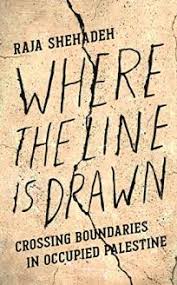
Where The Line Is Drawn XIX
10 Crossings During The Second Intifada: Ramallah, 2000 (pp. 155-170)
"In September 2000, five years after the Oslo Accords, came a second, more violent intifada. Israel immediately imposed more restrictions on movement and forbade us from using many of the roads." (p. 155)
In September 2000, I stopped working in Merseyside and started to work in Lancashire. This meant that I again lived full-time in Lancaster instead of commuting once or twice weekly to a bed-sit in Merseyside. Over the years, the bed-sit had moved from Crosby to Southport, both in Sefton, to Knowsley to Liverpool. Of course, I did not have to pass through military check-points while traveling.
Although I am involved in political activities, I am no way as well informed as many of many comrades on foreign affairs and international struggles. I remember that Palestine was an issue when I was at University in Dublin in the 1960s and when I was at Manchester Polytechnic, 1981-'82. Then this second intifada was still in the future. I was also under pressure at work in 2000 and might have been even less aware of less immediate (to me) issues.
"...in West Jerusalem...the municipal government, which was also responsible for East Jerusalem, provided well for all its Jewish residents while neglecting its Palestinian residents." (ibid.)
There is injustice and resistance.
"In September 2000, five years after the Oslo Accords, came a second, more violent intifada. Israel immediately imposed more restrictions on movement and forbade us from using many of the roads." (p. 155)
In September 2000, I stopped working in Merseyside and started to work in Lancashire. This meant that I again lived full-time in Lancaster instead of commuting once or twice weekly to a bed-sit in Merseyside. Over the years, the bed-sit had moved from Crosby to Southport, both in Sefton, to Knowsley to Liverpool. Of course, I did not have to pass through military check-points while traveling.
Although I am involved in political activities, I am no way as well informed as many of many comrades on foreign affairs and international struggles. I remember that Palestine was an issue when I was at University in Dublin in the 1960s and when I was at Manchester Polytechnic, 1981-'82. Then this second intifada was still in the future. I was also under pressure at work in 2000 and might have been even less aware of less immediate (to me) issues.
"...in West Jerusalem...the municipal government, which was also responsible for East Jerusalem, provided well for all its Jewish residents while neglecting its Palestinian residents." (ibid.)
There is injustice and resistance.
Subscribe to:
Posts (Atom)